Why Do Some Women Experience Recurrent Miscarriages?
Introduction
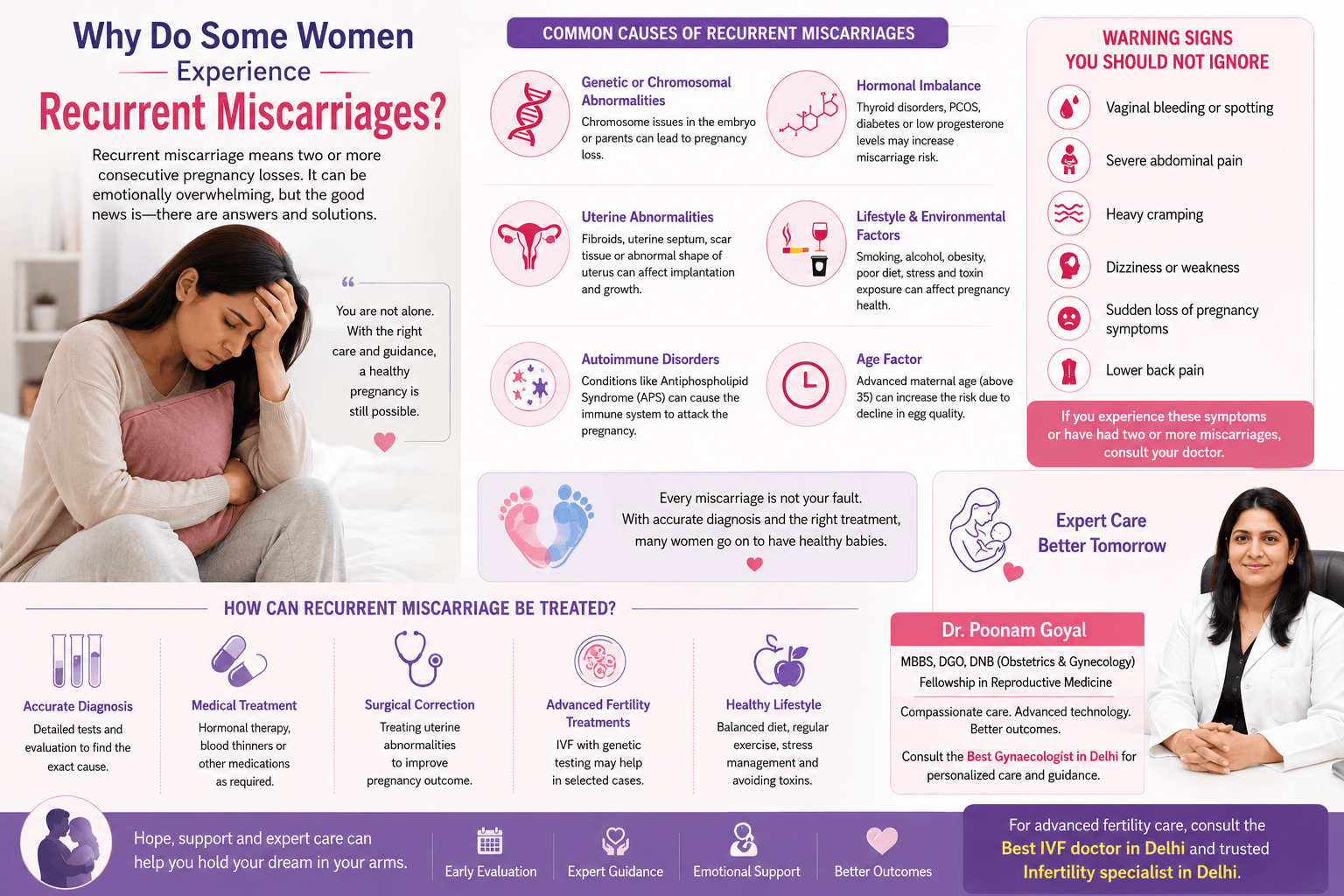
Recurrent miscarriage is one of the most emotionally difficult experiences for couples trying to start a family. A miscarriage refers to the loss of pregnancy before the 20th week, and when a woman experiences two or more consecutive pregnancy losses, it is called recurrent miscarriage. Many couples feel confused and heartbroken after repeated pregnancy loss, especially when the exact cause is not immediately clear.
According to Dr. Poonam Goyal, recurrent miscarriages are more common than many people realize, and with proper diagnosis and treatment, many women can still achieve a healthy pregnancy. Understanding the causes, warning signs, and available treatments is important for improving reproductive health and reducing emotional stress.
If you are searching for the Best Gynaecologist in Delhi, consulting an experienced specialist can help identify the underlying reasons behind recurrent pregnancy loss and guide you toward effective treatment options.
Common Causes of Recurrent Miscarriages
Genetic or Chromosomal Problems
One of the leading causes of recurrent miscarriages is chromosomal abnormalities in the embryo. Sometimes the baby does not develop properly because of genetic issues, leading to pregnancy loss during the early weeks.
How Genetics Affect Pregnancy
Chromosomes carry genetic information from both parents. If there is an abnormality in the chromosomes, the embryo may not survive. In some cases, parents may carry balanced chromosomal changes without knowing it.
Importance of Genetic Testing
Doctors may suggest genetic testing after repeated miscarriages to determine whether chromosomal issues are contributing to pregnancy loss.
Hormonal Imbalance
Hormonal disorders can interfere with implantation and fetal growth. Conditions such as thyroid disorders, low progesterone levels, and PCOS may increase miscarriage risk.
Common Hormonal Conditions
Thyroid disorders
Polycystic Ovary Syndrome (PCOS)
Diabetes
Progesterone deficiency
Women dealing with hormonal problems often consult an Infertility specialist in Delhi for fertility evaluation and reproductive care.
Uterine Abnormalities
Structural issues in the uterus can prevent proper implantation or affect fetal development.
Common Uterine Problems
Uterine fibroids
Uterine septum
Scar tissue inside the uterus
Abnormal uterine shape
Can Uterine Problems Be Treated?
Yes, many uterine abnormalities can be corrected with minor surgical procedures, improving pregnancy success rates.
Autoimmune Disorders
Certain autoimmune conditions can cause the immune system to attack healthy pregnancy tissue.
Antiphospholipid Syndrome (APS)
APS is one of the most common immune-related causes of recurrent miscarriage. It increases blood clotting and may reduce blood supply to the developing baby.
With proper diagnosis and treatment, many women with APS can successfully carry pregnancy to term.
Lifestyle and Environmental Factors
Daily habits and environmental exposure can also affect pregnancy health.
Factors That Increase Miscarriage Risk
Smoking
Alcohol consumption
Poor diet
Obesity
Chronic stress
Excess caffeine intake
Exposure to harmful chemicals
Dr. Poonam Goyal advises women to maintain a healthy lifestyle to improve fertility and support a healthy pregnancy.
Age-Related Fertility Decline
As women age, egg quality naturally decreases. Women above 35 years may have a higher risk of miscarriage due to chromosomal abnormalities in eggs.
Importance of Early Fertility Planning
Timely fertility assessment and reproductive care can improve pregnancy outcomes and reduce complications.
Many couples seek guidance from the Best IVF doctor in Delhi for advanced fertility support and pregnancy planning.
Signs You Should Not Ignore
Recognizing warning signs early and seeking medical attention can help reduce complications.
Common Warning Signs During Pregnancy
Vaginal bleeding or spotting
Severe abdominal pain
Heavy cramping
Dizziness or weakness
Sudden loss of pregnancy symptoms
Persistent lower back pain
Emotional Symptoms After Recurrent Miscarriage
Repeated pregnancy loss can also cause emotional stress, anxiety, depression, and fear about future pregnancies.
When to Consult a Specialist
Women who experience two or more miscarriages should undergo a detailed reproductive health evaluation.
Dr. Poonam Goyall recommends early medical consultation to identify the exact cause and improve future pregnancy success.
How to Fix or Treat Recurrent Miscarriages
Treatment depends on the specific cause of recurrent miscarriage. Proper medical evaluation is essential for successful management.
Medical Testing and Diagnosis
Doctors may recommend several diagnostic tests, including:
Common Tests
Blood tests
Hormonal evaluation
Ultrasound scans
Genetic testing
Hysteroscopy
Immune system testing
Early diagnosis improves treatment success and pregnancy outcomes.
Hormonal Treatment
Women with hormonal imbalance may require medications to support pregnancy.
Common Hormonal Therapies
Progesterone supplements
Thyroid medications
Diabetes management
PCOS treatment
Surgical Treatment
Some uterine abnormalities may require surgery to improve implantation and pregnancy success.
Surgical Procedures That May Help
Fibroid removal
Septum correction
Scar tissue removal
Fertility Treatments
Advanced fertility treatments can help couples facing repeated pregnancy loss.
IVF and Fertility Support
IVF with genetic testing can help identify healthy embryos before implantation, reducing miscarriage risk.
Couples often consult the Best IVF doctor in Delhi and an experienced Infertility specialist in Delhi for advanced reproductive treatment.
Lifestyle Changes
Healthy habits can support fertility and improve pregnancy health naturally.
Healthy Pregnancy Tips
Eat a balanced diet
Maintain healthy body weight
Avoid smoking and alcohol
Exercise regularly
Reduce stress levels
Sleep properly
Expert Tips
Advice from Dr. Poonam Goyal
Do Not Lose Hope
Many women experiencing recurrent miscarriages eventually achieve healthy pregnancies with proper treatment and emotional support.
Seek Early Medical Evaluation
Early diagnosis helps doctors identify underlying problems before future pregnancies.
Focus on Emotional Health
Counseling and emotional support can help couples cope with repeated pregnancy loss.
Follow Regular Prenatal Care
Regular pregnancy checkups help monitor fetal development and reduce complications.
Women searching for the Best Gynaecologist in Delhi should choose a specialist experienced in fertility and high-risk pregnancy management.
Conclusion
Recurrent miscarriages can be emotionally and physically challenging, but proper diagnosis and treatment often improve pregnancy outcomes. Genetic problems, hormonal imbalance, uterine abnormalities, autoimmune disorders, unhealthy lifestyle habits, and age-related fertility decline are among the most common causes.
Dr. Poonam Goyall believes that every couple deserves compassionate care, emotional support, and personalized treatment during their fertility journey. With modern medical advancements and expert guidance, many couples experiencing recurrent miscarriages can successfully achieve a healthy pregnancy.
If you are searching for the Best IVF doctor in Delhi or an experienced Infertility specialist in Delhi, timely consultation can help you understand the cause of pregnancy loss and explore effective treatment options.
FAQs
What is considered recurrent miscarriage?
Two or more consecutive pregnancy losses are generally considered recurrent miscarriages.
Can recurrent miscarriage be treated?
Yes, many causes of recurrent miscarriage can be diagnosed and treated successfully.
Does stress cause miscarriage?
Severe stress alone may not directly cause miscarriage, but chronic stress can negatively affect reproductive health and pregnancy.
Can IVF help prevent recurrent miscarriage?
IVF with genetic testing may improve pregnancy success rates in some couples experiencing repeated pregnancy loss.
When should I consult a fertility specialist?
You should consult a fertility specialist after experiencing two or more miscarriages or difficulty maintaining pregnancy.
Appreciate the creator